
Alphabet Joins the Dow: What Google's Index Inclusion Means for Tech Portfolios
Alphabet has officially joined the Dow Jones Industrial Average, boosting the blue-chip index. We examine the math of price-weighted indices, index tracking flows, and how it impacts retail portfolios.

Alphabet Joins the Dow: What Google's Index Inclusion Means for Tech Portfolios
In a historic realignment of blue-chip stock benchmarks, index administrators announced that Alphabet Inc. is officially joining the Dow Jones Industrial Average. This inclusion represents a major milestone for Google's parent company and has prompted immediate capital reallocation from retail and institutional index-tracking portfolios.
The mechanics of a price-weighted index
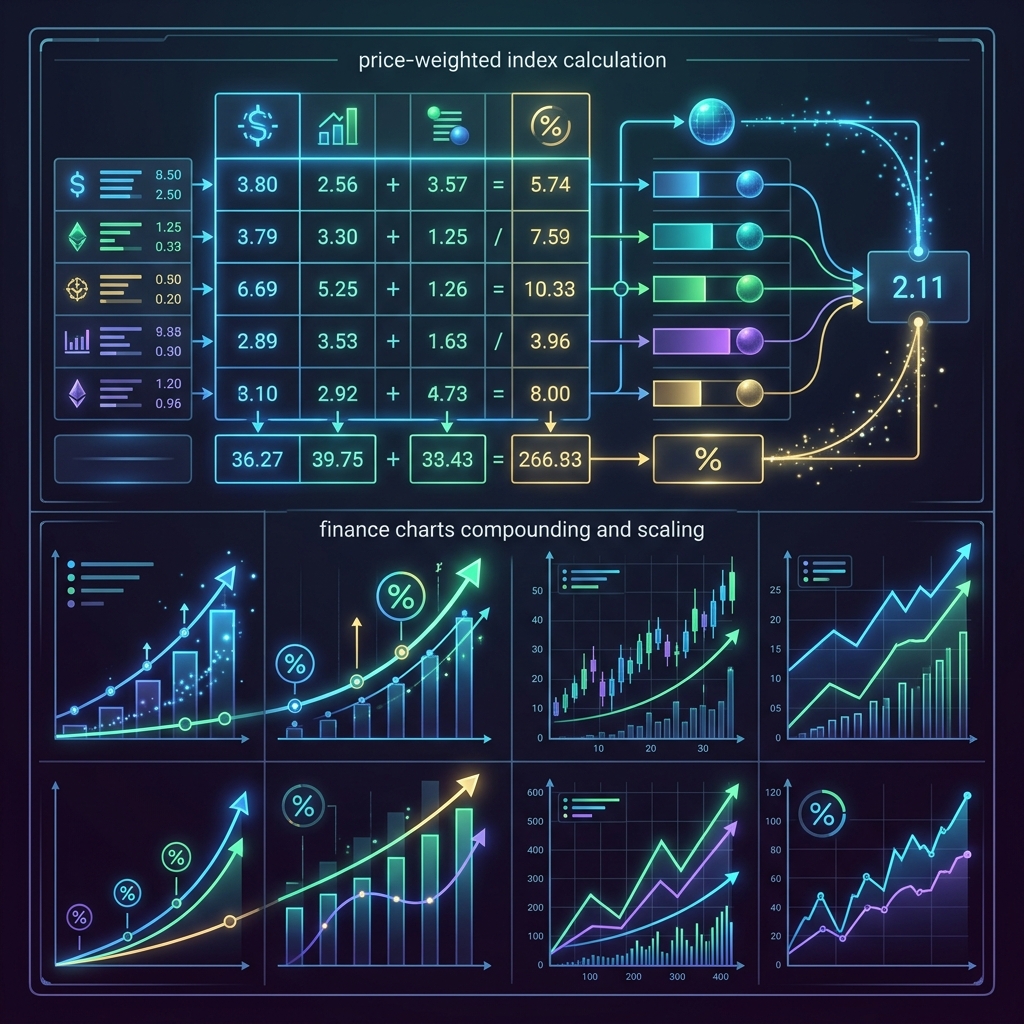
Unlike the S&P 500 or Nasdaq 100, which are market-capitalization-weighted, the Dow Jones Industrial Average is a price-weighted index. This means a stock's influence on the index is determined solely by its share price, not its total market valuation. Alphabet's inclusion was made feasible by historical stock splits that brought its share price into a range that prevents it from disproportionately dominating the index.
The shift of Alphabet into the index introduces several key dynamics:
- Inflow of Passive Capital: Millions of dollars in passive mutual funds and exchange-traded funds (ETFs) tracking the Dow are forced to purchase Alphabet shares to mirror the index allocation.
- Increased Stability: Alphabet's mature cash flows and diversified revenue streams are expected to reduce the daily volatility of the Dow.
- Rebalancing Pressures: To accommodate Alphabet, other index components must see their weights slightly reduced, triggering minor sell-offs in legacy industrial and financial stocks.
Portfolio implications for retail investors
For retail investors, Alphabet's addition to the Dow solidifies its status as a foundational utility of the modern digital economy. Passive portfolios will now automatically hold a larger share of big tech, reflecting the ongoing transition from traditional manufacturing toward software and computing infrastructure.
Conclusion
Alphabet's inclusion in the Dow Jones Industrial Average highlights the evolution of what qualifies as an "industrial" giant in the 21st century. As tech conglomerates continue to anchor global indices, understanding the mathematical structures of index weighting is essential for building a resilient portfolio.
Try it free