
Meta's AI Restructure Backfires: Applied AI Team Dubbed 'The Gulag'
A leaked memo from Meta's CTO reveals friction in the company's recent AI reorganization, with employees describing the Applied AI team as "the gulag." We discuss developer metrics, focus sessions, and burnout prevention.
Meta's AI Restructure Backfires: Applied AI Team Dubbed 'The Gulag'
Internal tension at tech giant Meta surfaced on June 16, 2026. A leaked memo from the company's Chief Technology Officer admitted that its recent, massive restructuring to form the "Applied AI" division was poorly executed. The reorg, intended to accelerate the deployment of large language models across Meta's product suite, has instead triggered widespread employee dissatisfaction, with engineers internally labeling the new division "the gulag" due to high-pressure operational demands.
The cost of poorly executed reorganizations
The shift to Applied AI consolidated thousands of engineers into a centralized resource group. However, the transition has reportedly suffered from shifting product goals, overlapping reporting structures, and a grinding workload centered on manual data labeling, model sharding, and latency optimization.
Key takeaways from the leaked memo include:
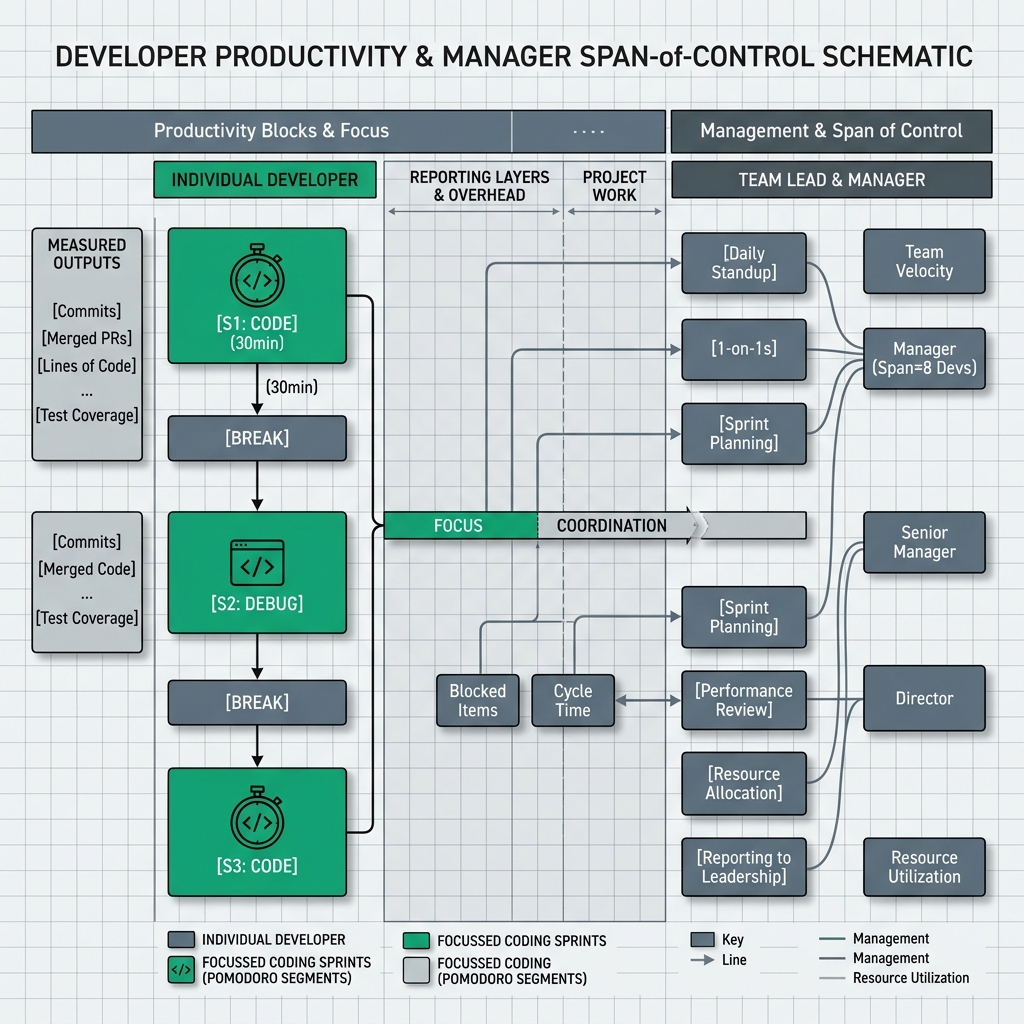
- Management Span-of-Control: Meta is proposing to cap manager reporting lines to prevent communication bottlenecks and ensure team leads can provide adequate support.
- Burnout Mitigation: Increased travel budgets and team-building events are being introduced to restore engineer morale.
- Operational Friction: The centralization separated engineers from direct product contexts, leading to slower iteration cycles.
Managing developer productivity and focus
When organizations restructure, developers often bear the brunt of the administrative noise. Constant meetings, status updates, and reporting adjustments disrupt deep-focus states. To maintain coding momentum under organizational stress, engineers must establish boundaries:
- Time Blocking: Dedicating specific blocks of time exclusively to deep work, minimizing chat notifications and administrative tasks.
- Interval Sprints: Breaking complex tasks into structured, focused sprints followed by short rest breaks to maintain long-term cognitive endurance.
Conclusion
Meta's restructuring challenges demonstrate that scaling artificial intelligence requires more than just compute power; it requires sustainable team structures. As tech companies reorganize to meet the demands of the AI era, protecting developer focus and maintaining clear, balanced management scales will be the true differentiator for successful platforms.
Try it free