
The Sovereign AI Shift: Why Canada and the EU are Building National Clouds in 2026
In light of the new AI Executive Orders and strategic security initiatives, Canada and the EU are investing heavily in sovereign cloud infrastructures. We dissect the technical compliance rules for developers.
The Sovereign AI Shift: Private Clouds & Data Residency in 2026
In early June 2026, global policy initiatives—including the new U.S. Executive Order on secure AI infrastructure and the European Commission's strategic cloud proposals—have pushed a new technical requirement to the forefront: Sovereign AI. Governments in Canada and the European Union are investing heavily in national cloud networks to ensure that public sector data, citizen telemetry, and enterprise source code remain within local geographic boundaries.
For software developers, this transition requires a deep understanding of data residency compliance, local encryption, and edge computing patterns.
The Driver: Why Sovereign Clouds are Necessary
For the past few years, the majority of AI model inference was hosted on centralized cloud servers located in foreign jurisdictions. This created critical compliance conflicts for highly regulated sectors (such as health, finance, and government services):
- Transborder Data Flows: Sensitive data, user telemetry, and query configurations were routed across borders, violating regional privacy laws.
- Lack of Infrastructure Control: Relying on foreign cloud ecosystems exposed critical infrastructure to foreign legislative demands and security compromises.
- Data Leakage Risks: Feeding private source code, database variables, or identity tokens into third-party training pipelines posed massive intellectual property risks.
Technical Compliance for Developers
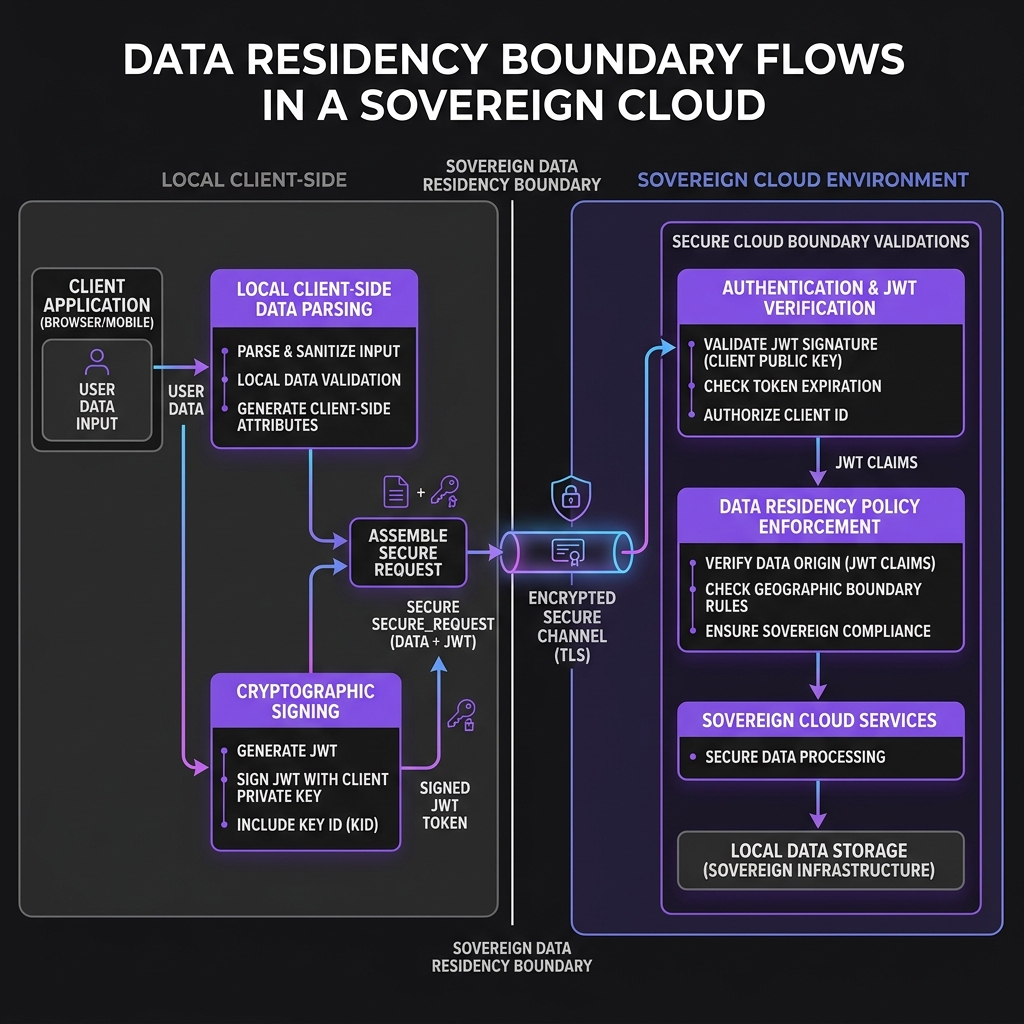
To meet sovereign requirements, software engineers must adjust their application architectures. Key practices include:
- Local-First Parsing: Run initial configurations, telemetry mapping, and parameter conversions locally. For example, converting Kubernetes manifests (YAML/JSON) directly in the browser to prevent server-side transit.
- Offline Cryptographic Signature Keys: Instead of relying on server-side token generation, developers can compile and sign secure JSON Web Tokens (JWT) client-side using the browser SubtleCrypto API, keeping private keys completely offline.
- User-Agent Telemetry Sanitization: Strip user identity tags from client headers locally before logging diagnostic information to remote cloud monitors.
Conclusion
The Sovereign AI movement marks a transition from unrestricted global data centralization to secure, regional data stewardship. By combining sovereign national clouds with local, browser-based encryption and parameter validation, developers can design compliant systems that protect user privacy and respect data residency guidelines without sacrificing utility speed.
Try it free