
SpaceX Goes Public: Elon Musk Becomes the World's First Trillionaire
On June 12, 2026, SpaceX debuted on Nasdaq (SPCX), pushing its valuation past $2 trillion and officially cementing Elon Musk as the world's first trillionaire. Here's the financial math behind this milestone.

SpaceX Goes Public: Elon Musk Becomes the World's First Trillionaire
The financial landscape witnessed a historic milestone on June 12, 2026. SpaceX completed its highly anticipated initial public offering (IPO) on the Nasdaq exchange under the ticker symbol SPCX. The trading debut not only marked the largest IPO in history but also officially propelled SpaceX founder Elon Musk into trillionaire status, making him the first individual in modern history to cross the 13-figure net worth threshold.
The numbers behind the SPCX debut
Investor appetite for the commercial aerospace leader exceeded all initial estimates. The offering was priced at $135 per share, raising approximately $75 billion. As trading commenced, high demand drove the price upward:
- Opening Price: Shares opened at $150 and climbed to intraday highs over $176.
- Closing Price: The stock stabilized to close at approximately $160 per share.
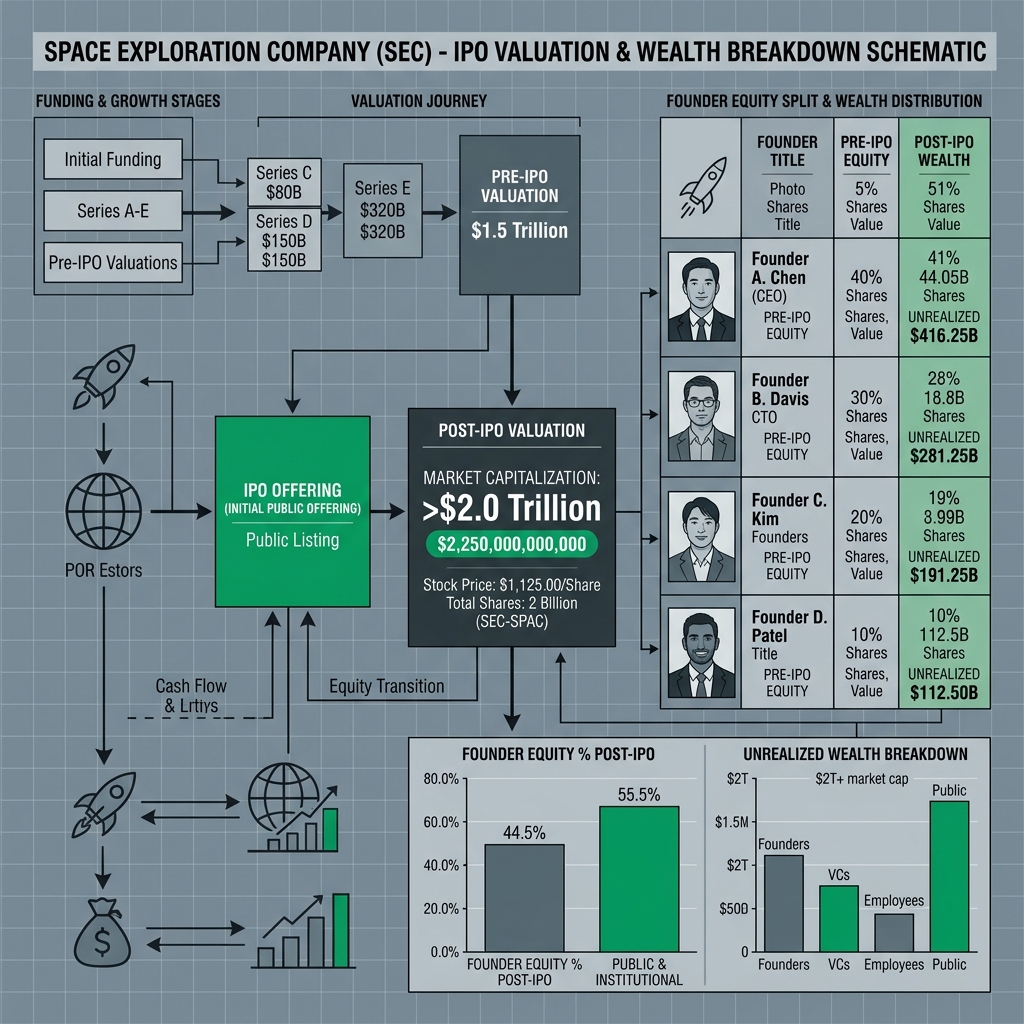
- Market Capitalization: By the close of day one, SpaceX's valuation surged past $2 trillion, placing it alongside elite tech giants.
The trillionaire math
How does a $2 trillion valuation translate to personal wealth? Elon Musk retains a massive equity stake in SpaceX, estimated at approximately 38% to 42% when accounting for vested options. Following the IPO:
- SpaceX Holdings: Musk's ownership in SpaceX alone is valued at roughly $760 billion to $840 billion.
- Tesla and Other Assets: When combined with his holdings in Tesla, xAI, Neuralink, and Boring Company, his total net worth reached approximately $1.1 trillion according to indices from Forbes and Bloomberg.
This wealth concentration has reignited debates around global economic inequality, with policy groups and international organizations like Oxfam calling for tax reforms, while supporters point to the capital required to fund multi-planetary exploration.
Conclusion
The SpaceX IPO is a landmark event that demonstrates the immense valuation unlocked by private aerospace development and deep tech infrastructure. As the world's first trillionaire is minted, the focus shifts to whether public markets will continue to support the capital-intensive roadmaps of orbital infrastructure and interplanetary expansion in the coming decade.
Try it free